TO ALL THOSE THAT KEEPS ME SPINNING AND THE GREEN GLOW OF LIFE SHINNING; TO ALL THAT HAVE SUPPORTED, LOVED AND HUGGED ME; TO ALL THOSE WHO HAVE INSPIRED AND TAUGHT ME; AND TO ALL THOSE WHO HAVE NOT... GOD BLESS YOU...LVAD... Left Ventricular Assist Device
PARTIAL HEART PUMP = LEFT VENTRICULAR ASSIST DEVICE = LVAD = THE HEARTMATE II
THE LVAD ALLOWED ME to go HOME and conquer my normal and newest tasks once again.
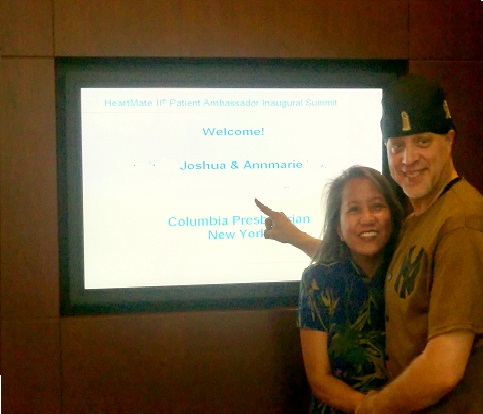
Thank you Columbia-Presbyterian... Dr Naka and his Surgery Team, LVAD Nation, Dr Bijou & Dr Bonoan, Dr Mascitelli and Dr Shulman-Marcus!!!
AND TO THE SCORES OF PHYSICIANS, NURSES, PROFESSIONALS AND PEOPLE THAT PUSHED ME ALONG THE WAY... FORWARD.
Thank You God For I Am Blessed!
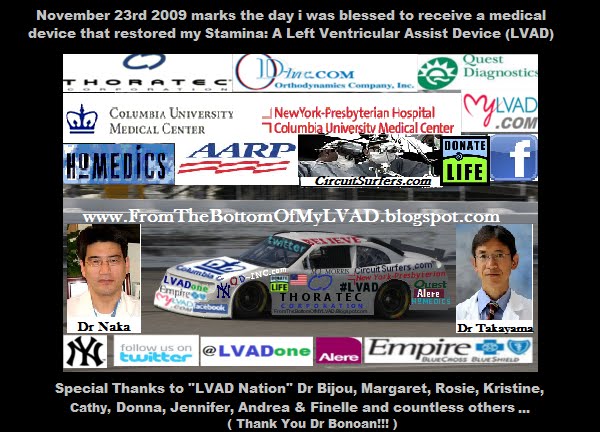
If I Was An LVAD-NASCAR Race CAR
I would look like this :-)
FROM THE BOTTOM OF MY LVAD DAILY NEWS AND INFO FEED
CLICK LINK BELOW FOR:
25 December 2011
RUDOLPH THE LVAD REINDEER SPOTTED IN NYC
TO ALL THOSE THAT KEEPS ME SPINNING AND THE GREEN GLOW OF LIFE SHINNING; TO ALL THAT HAVE SUPPORTED, LOVED AND HUGGED ME; TO ALL THOSE WHO HAVE INSPIRED AND TAUGHT ME; AND TO ALL THOSE WHO HAVE NOT... GOD BLESS YOU...21 March 2010
LVAD AWARENESS for Paramedics/EMT/EMS Ambulance Companies. 911 PROTOCOL?
Currently i am visiting online emergency services forums. Most are unaware of how to treat an LVAD patient. They do not know that LVAD recipients do not have a pulse or a "readable" blood pressure. However, they are all eager to learn.
The Heartmate ll made by THORATEC is the first CONTINUOUS FLOW DEVICE. It has only one moving part making it more reliable. Since it is a continuous flow design, the blood is in constant flow as opposed to the native heart beating that creates the pulse. The Heartmate ll is approved by the FDA for use in the USA for Bridge To Transplant (BTT) and Destination Therapy (DT) patients.
THE SCENARIO:
A 911 call is made from a cell phone at a mall. A male patient collapses and seems too sluggish to move. An ambulance is immediately dispatched to the location. The paramedics arrive and find the patient sitting on the floor with his wife by his side. The male patient is conscious and answers the questions the paramedics ask.
He states he became dizzy and passed out. The patient continues to say that he has a left ventricular assist device (LVAD) implanted and grafted to his heart. The LVAD helps pump oxygen-enriched blood that his damaged heart can not do. The male patient also claims that due to the design of the LVAD, basic equipment WILL NOT detect his Blood Pressure nor Pulse.
Only special Doppler equipment will detect his vitals.
It appears that the patient has lost color and is sweating. What next? There is a titanium heart/blood pump implanted to his heart. If needed, are chest compressions dangerous for this patient? The answer is YES! It can cause the LVAD to dislodge from the heart and the patient can internally bleed.
I am a 47 yo male with an LVAD implant. I DON'T HAVE the conventionally found Blood Pressure and I do not have a Pulse, However I am alive and well and I am trying to raise awareness of 911/EMT/LVAD PROTOCOL and to obtain more info from the experts on how to spread this crucial topic. It is predicted that the LVAD will be as common as dialysis.
So it is imperative that our 1st responders should be "user-friendly" with LVAD recipients especially when most LVAD recipients are leading mobile and normal lives.
Thank you
and the good saga continues...
10 March 2010
HeartMate® II 75 page PDF DOWNLOAD:
HeartMate® II LVAS:
Patient Management Guidelines
75 page PDF DOWNLOAD here:
http://www.fda.gov/ohrms/DOCKETS/ac/07/briefing/2007-4333b2-20-%209_4%20HM%20II%20Patient%20Management%20Guidelines.pdf
02 March 2010
The LVAD is a sensible and remarkable option for people with heart falure.
The LVAD is a titanium pump that does the job of the heart's left ventricle; pumping oxygen enriched blood.
It is implanted behind the ribcage and grafted to the heart.
The pump is a mini jet/turbine motor turning 8,600 +/- revolutions per minute (RPM). Its job is to pump 4 to 7 liters of blood per minute from the left ventricle up to the aorta. The LVAD is powered through a special wire called a driveline that is connected to the pump portion of the LVAD and tracks through the body to an exit point in the lower left or right abdomen.
The driveline wire exits the abdomen and is connected to a system controller/computer that monitors and powers the LVAD. The main functions of the system controller maintain the pump motor's RPM, the amount of blood flow while alerting the LVAD recipient with alarms should something be abnormal or fail. It also stores in depth daily data that can be seen on a home base system monitor or retrieved at the hospital during routine checkups.

The power source of the LVAD is electricity via a household electrical outlet or 2 lithium batteries. The lithium batteries can last up to 16+ hours in an emergency but 12 hours is the recommended use before changing to fully charged batteries.
Each battery weighs close to 1.5 lbs and worn in shoulder-supported holsters.

When at home, but especially asleep, the batteries are removed and the LVAD is plugged into a household electrical outlet. Each time an LVAD recipient leaves his or her home, they must carry at least 2 extra batteries and an extra system controller in the event of rare problems or failures.
As an LVAD recipient, I believe the LVAD is a sensible and remarkable option for people with heart falure. As stated by a cardiologist at NewYork-Presbyterian Hospital, Dr Ulrich Jorde said "...it could save the lives of 10,000 Americans a year."
And it saved mine.
And the good saga continues...